Japan 2017, Tokyo Nakasendo trail day 1

Monday morning the 20th of March we met  Kiyo(Kiyoko Se) our Japanese Guide for the next 12 days in the hotel lobby in Tokyo. Normally this trip is for 10-12 people but Tony and I are the the only guests on this Oku travel guided walk- what a luxury to have Kiyo all to ourselves. The plan was to follow part of the Nakasendo route on foot through the Kiso valley.

The Kiso Valley grew in importance during the Edo period (1603-1868) when the 500 km long Nakasendo route was formed. The Nakasendo (“path through mountains”) was one of the two means of transportation between Edo (Tokyo) and Kyoto. It contrasted with the other principal transportation route of the time, the Tokaido, which ran along the coast and was prone to flooding.

Because of restrictions by the shogunate (the Japanese government in Tokyo), travelers were almost always forced to make their trips on foot. As a result, “post towns” developed every few kilometers to provide travelers with places to rest, eat, and find nightly accommodation during their arduous journey.

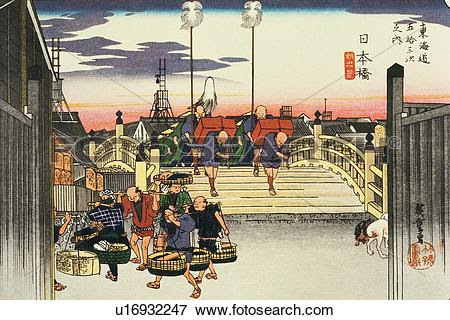
Our first stop on Monday  morning was Nihombashi bridge where the Nakasendo route starts in Tokyo ( see wood cut above). All that is left is a plaque in the middle of the bridge. Otherwise the bridge is rather disfigured by a massive motorway flyover.

We continued our history lesson by going to Ueno park and the Tokyo National museum to learn a bit more about the Edo period and stroll through the lovely museum garden.

We also visited the grand Meiji Shinto shrine which represents the period after Edo. The upkeep of the shrine is supported   by Sake breweries represented here by rice barrels and also wine companies. Sake is an important drink during religious festivals and ceremonies even weddings.

The very impressive wooden Shinto Torii gate is the 12m high  entrance to the shrine and decorated with gold leaf 16 petal chrysanthemum the emperor’s crest. The Meiji period lasted from (1868-1912).

After a delicious  lunch with Kiyo we prepared ourselves for the first day of actual walking the Nakasendo route.

Japan 2017, Hakone

Sunday 19th of March was a bank holiday weekend in Japan, the sun was shining in Tokyo and we thought what a great day for us to see Mount Fuji and the Lalique Museum in  Hakone which lies in the mountains about 1 and 1/2 hrs south of  Tokyo. We dropped everything and dashed off to Hakone. Well, thousands of Japanese and other tourists had the same idea.

To start it all went well but when at 10am we got  to Odewara the nearest big town to Hakone and heard that there was already a traffic jam going up the mountain we should have become suspicious.

We bought a day pass, took the scenic train through the mountains, a bus and a ferry across lake Ashi from where we were meant to see Mount Fuji.

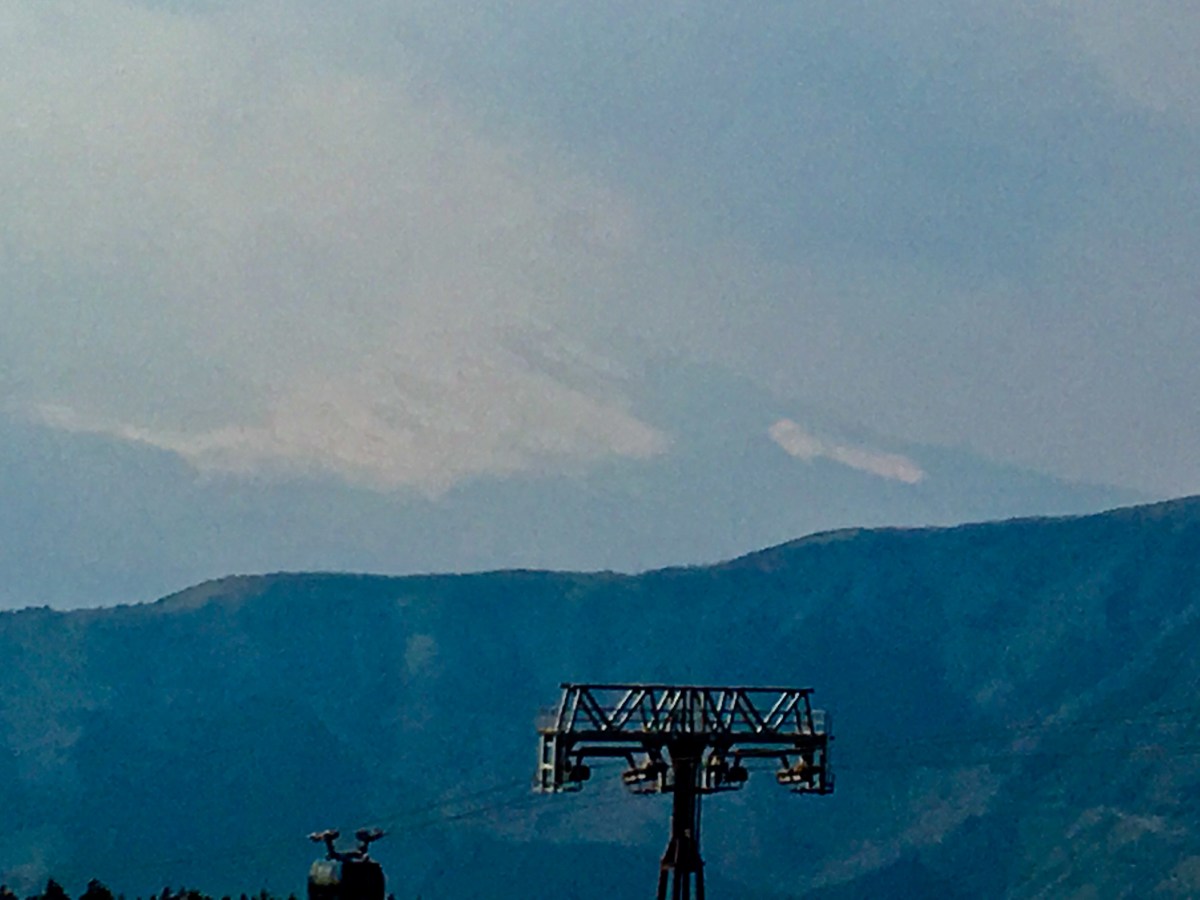
But by the time we reached the lake, haze had enveloped the upper half of “our shy mountain” (as our Japanese guide described Fuji). But we got a good view of the snow covered lower half. We then took a rope car up the mountain to catch Mount Fuji from the top, but we saw less as the haze had increased.

We consoled ourselves by eating black eggs which had been cooked in sulphurous spring water and are meant to increase your life span by 7 years. Tony ate 2 as he decided 14 more years were enough, I ate 3 eggs.

Back down the mountain and onwards by bus to the Lalique Museum, which Tony had read about several years ago. Lalique was French jeweller and glassmaker, who successfully straddled the years between Art Nouveau and Art Deco. It’s hard to see much of his stuff – other than near Hakone, and Alsace.

After that our troubles really started, as everybody was trying to make their way home! Hours later we realised that we would not get back to Tokyo in time to meet our tour guide for dinner that night. Once we had contacted her and agreed that we best meet the following morning we got off the bus and went to relax in a famous Onsen called Tensan Notemburo,  where Tony accidentally ended up in a pool with three heavily tattooed yakusas ( Japanese criminals) and lived to tell the tale. We finally made it home by midnight.

We have since walked the Kiso valley and seen Nara, more of that next time.

Japan 2017, Kanazawa

We arrived in Kanazawa late on Thursday night the 16th of March after our wonderful day in Matsumoto only to be greeted by thousands of Japanese physicians. They had descended on Kanazawa for their annual ” circulation meeting” which was held in our hotel. So many of them looked hassled, rushed and tired just like doctors anywhere in the world. They mostly wear black suits. We also met some very jolly  female American professors who had been invited to give talks at this conference and used the occasion either as an excuse to travel around Japan, or visit relatives.

Kanazawa is a rich and very attractive city to visit. It lies by the Sea of Japan to the west and the snow capped Japanese Alps to the east. It escaped bombing during the 2nd world war, is known for its fertile land, production of rice and gold leaf , which even today decorates the food they serve. In the 15th century it was ruled by a collective of farmers and Buddhist monks. However in the 16th century the Maeda family took over Kanazawa castle and concentrated on food production and arts and crafts rather than war. Its a tourist destination boosted by the recent arrival of the Shinkansen train and a brand new train station, see picture below.

Today Kanazawa’s main attraction is Kenrokuen strolling style landscape garden originating in the Edo period (1603-1868). It has been remodelled due to fires and is known for its amazing water features.

I was very much looking forward to seeing this garden. We even changed our dates for our visit of Kanazawa which is known to have a rainy climate, to see the garden in sunshine and we were rewarded with bright blue sky when we woke up on Friday morning!

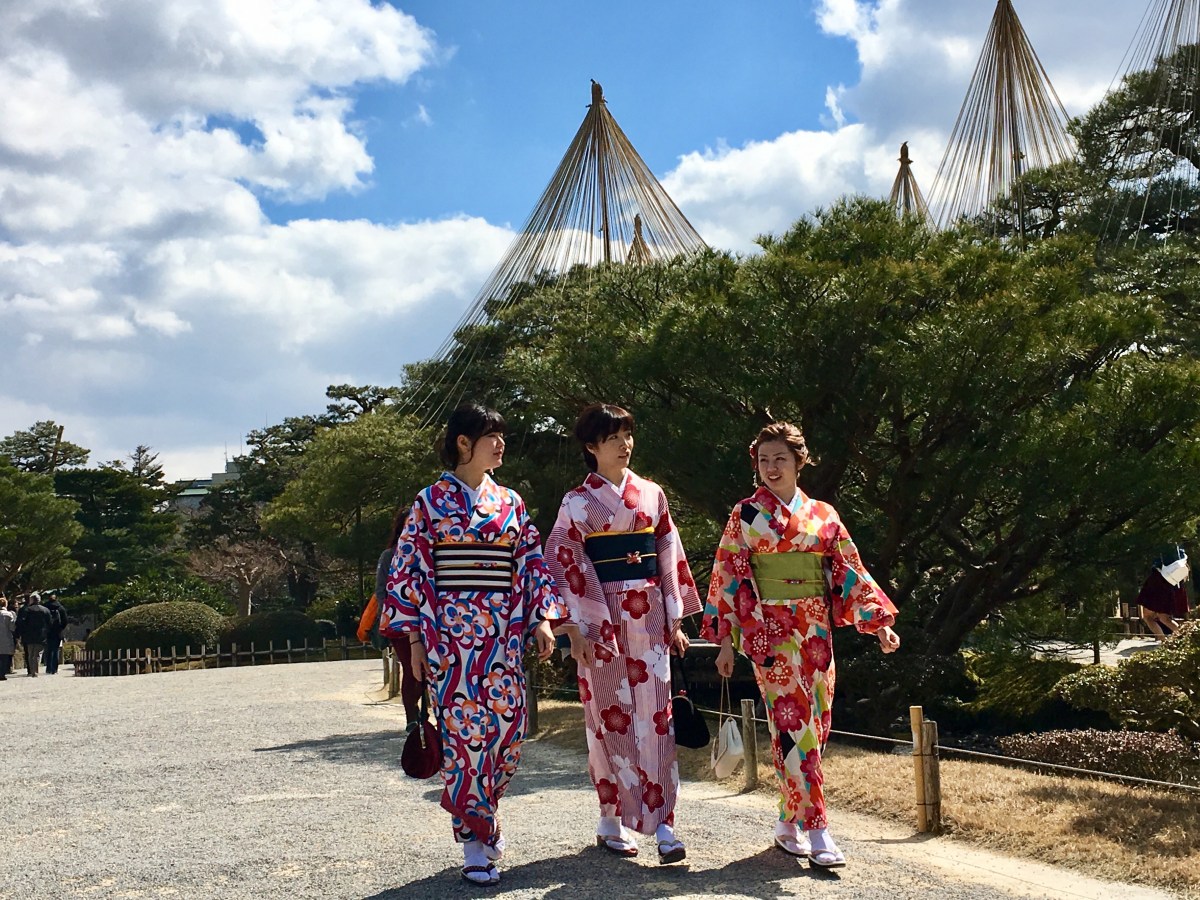
Strengthened by a bowl of fresh raw moving sweet prawns from the Omicho fish market for breakfast we strolled through Kenrokuen garden which was a delight. Some girls had dressed up  in kimonos for the occasion (see picture at the top). The plum blossom was out, the moss looked lush and green, the vistas and lakes were amazing. It embraces six horticultural graces- spaciousness, seclusion, artificiality, antiquity, water and panoramic views. We took part in a tea ceremony.

We also visited the elegant Japanese  villa  Seison-Kaku which lies in the garden and was build in 1863 by the daimyo Maeda for his mother in retirement. We finished the day in the historic  Nagamachi district. All the traditional Japanese houses are lived in and you can also see a former Samurai house of the Nomura family. No idea whether their is a connection to Nomura bank? I bought a lovely tea bowl.

Saturday was another beautiful day and we saw the much smaller Gyokusen-en Garden and took part in another tea ceremony. As we were the only guests the exact procedure was explained to us and I distinguished myself by making the appropriate loud slurping noise once I had finished my green tea.

Afterwards we walked to the museum build in honour of a famous Buddhist philosopher called Suzuki, whose book on Zen Buddhism Tony has just read. Architecturally the museum is a feast with spaces to learn about Suzuki’s life and contemplate about your own life.

Our final destination was the 21st century museum of contemporary art which featured an interesting exhibition attempting to define the difference between craft and design- not so easy! Is a Thonet chair craft and a chair made out of plastic design?

The museum’s best feature is a swimming pool which you can walk into and also see from above.

In the evening we took the Shinkansen to Tokyo which took all of 2 and 1/2 hours.


Japan 2017, Matsumoto Castle and the museum of the floating world

Thursday morning the 16th of March the sun reappeared after a day of fresh snow in Takayama. We decided to take the bus through the Japanese Alps to see Matsumoto Castle which is in contrast to Himeji Castle black, lies in a valley, and is much smaller. The bus ride was beautiful.

We arrived in Matsumoto mid morning, put our luggage into a locker (so easy in Japan) and walked to the castle which is situated in the middle of a very elegant and modern town quite clearly wealthy. It was also the hometown of Suzuki, who invented the Suzuki method of teaching the violin.

On the way to the Castle we were offered a free guide. He spoke excellent English and  described himself as a retired “salary man from Tolyo”. He felt that the quality of life was much better in Matsumoto and took great pleasure in taking us around the Castle!

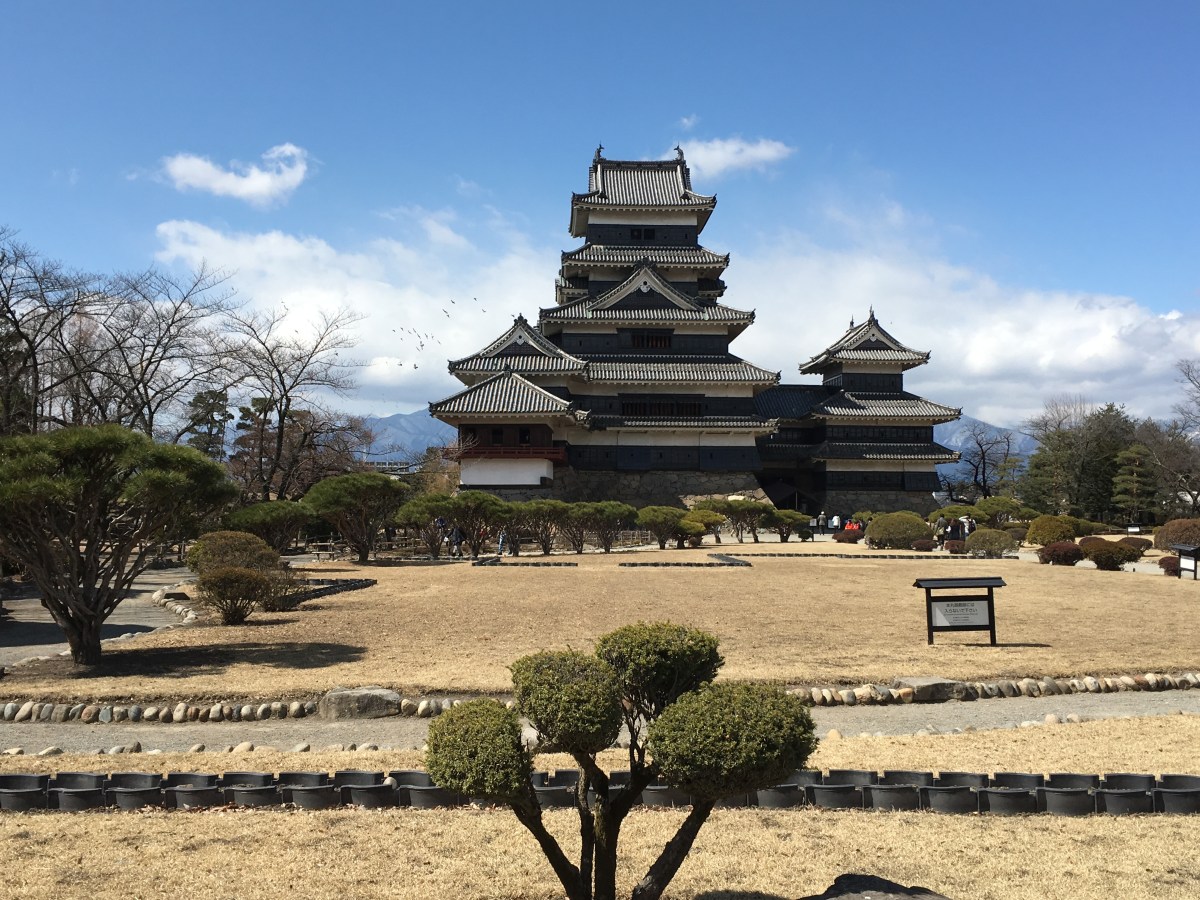
The Castle was completed in 1595 and is the oldest wooden castle with very steep steps to the top from where one has wonderful views to the Alps. Japanese castles were not lived in but places for storage of weapons and food such as rice. Also if the Samurai had to defend themselves they would climb higher and higher in the castle. If you reached the top you had lost and it was time to commit Hari-kari. This castle also has a recently restored moon  viewing room, where the Samurai used to relax and drink Sake.

Spot the Ninja and the samurai. Tony with our guide.

We had a delicious lunch of Soba ( Buckwheat) noodles which are either served cold or hot in a broth and topped with mountain vegetables, mushrooms, tofu and sometimes other delicacies.

On the outskirts of Masumoto lies the wonderful Ukiyo Museum, featuring woodblock prints of the “floating world”, of transient pleasure. The prints depicted beautiful  women, actors, travel scenes and landscapes.They were collected by European artists such as Monet, van Gough and Toulouse Lautrec.

Above just a few examples of the pictures we saw.

Later that afternoon we caught the Shinkansen train to Kanazawa, famous for its gardens. More in the next blog XxF

Japan 2017, Takayama and Hida Folk village


Normally Tony and I have a spreadsheet with every day of our holiday mapped out. This time we decided to be spontaneous and so we did not go to Okinawa the southern subtropical islands of Japan as originally planned due to bad weather. At the beginning of last week we changed our plans again and on the 13th of March we went to Takayama a very pretty old town in central Honshu surrounded by the Japanese Alps to follow the sun. Such changes of plan are made much easier by booking.com’s free cancellation policy and the fantastic rail pass. So we booked ourselves into the Takayama Ouan which describes itself as a ” modern style Japanese Hotel”. The entrance looks like a traditional Japanese inn but behind it is  a high rise building.

On arrival at the hotel you take off your shoes, wear their house clothes and sleep on the floor and everything works with machine like precision. We must have been the oldest guests by far. An added bonus was very good food and the Onsen with a view over the town on the top floor of the building.  On a first come basis one could also book a private onsen as a couple. Pictures below of the hotel entrance and high rise behind.

Tuesday the sun was shining, perfect for a stroll through the local food market with the most delicious apples, the old town with traditional houses including the Takayama Jinya which served as a branch office of the Edo government (1692-1868).

Takayama is a timber producing town and also has a famous spring festival in the middle of April when big floats are paraded through town. It began about 350 years ago and some of these floats are exhibited in a museum.

We visited the local Shinto shrine where Tony decided I-who don’t like foxes should be photographed between them.

Then we went to see Hida Folk Village (title picture) which preserves traditional vernacular houses and lifestyles. The houses were all moved from different areas of the region and  give a good impression of the hardship of their former inhabitants’ lives.

Not surprisingly with the arrival of the washing mashing, refrigerator and television there was a huge shift of people from the countryside to the city. In addition, the American occupation of Japan after the 2nd world war resulted in the adoption of many features of American culture. This is beautifully illustrated in the Takayama Showa museum which travels back to 1955.

On Wednesday Tony went to Nagoya for the annual  Honen matsuri spring festival, which celebrates human fecundity – or at least the male contribution to it.

He said it seemed quite serious with blessings from Shinto priests, although he left before the revellers had got into the free sake. Sake is considered a holy drink and is consumed at Shinto festivals.

IMG_6992


For those obsessed by measurement, or woodwork: the phallus that is carried in procession weighs 280 kg (620 pounds) and is carved afresh each year in  cypress. It measures 2.5 meters (96 inches) long.

I cannot top this.

Next blog about Matsumoto castle.xxF

Japan 2017, Kyushu-in search of the Kumamoto Aso fire festival, Japanese porcelain, warmth and a bit of rest

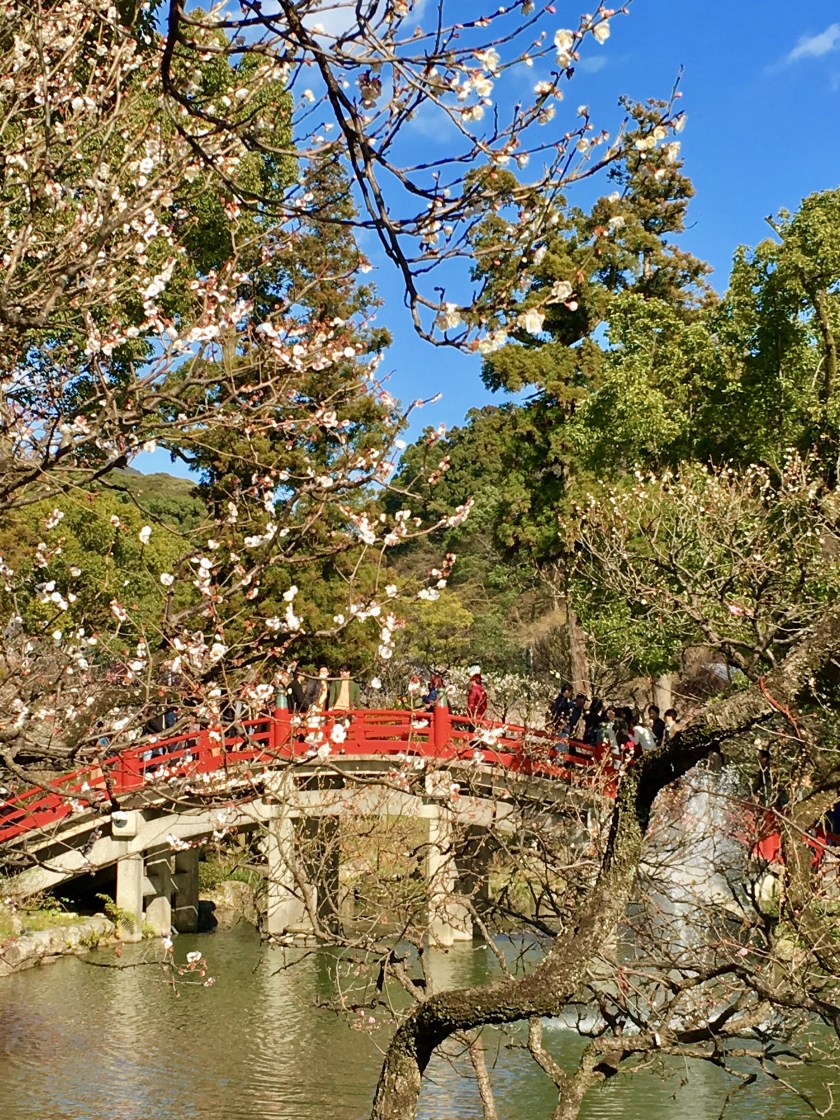
The trouble is, traveling by train in Japan with our rail passes is so easy that one is tempted to do huge distances without much thinking. So on the 9th of March we took the Shinkansen from Okayama to Fukuoka in northern Kyushu ( Japan’s most southern island), hired a car and drove inland to stay in a Hotel called Miyama Sansou, which we booked on the spur of the moment. Just as well because it is not cheap.  On the way we stopped at Dazaifu shrine to see our first Plum Blossom
FullSizeRender

The hotel lies in the Aso  mountain range next to a river with a hot spring (Kurosawa Onsen), which the hotel taps into and so you have your own indoor and out door Onsen attached to your room.

IMG_7983


If you want to feel even closer to nature you can also go to the very large Hotel Onsen which sits in the forest with the river and a small waterfall cascading down next to you- pretty special and another recommendation from Marcelo.

The hotel food was divine as was the service and the staff. We made friends with Sayaka who spoke English as she had worked in New Zealand previously.

Unfortunately the official fire festival  during which the mountains are set ablaze in spring was cancelled or at least not happening until the following Saturday at the Aso Shrine, where the locals celebrate spring, the planting of rice and pray for a rich harvest by brandishing pine torches.

However the mountains around the hotel were burnt off on Sunday right in front of our little garden. Tony described it as a very Zen moment for him: only when he stopped looking for the fire festival on the nearby mountains did it happen-on our own door step.

IMG_8029

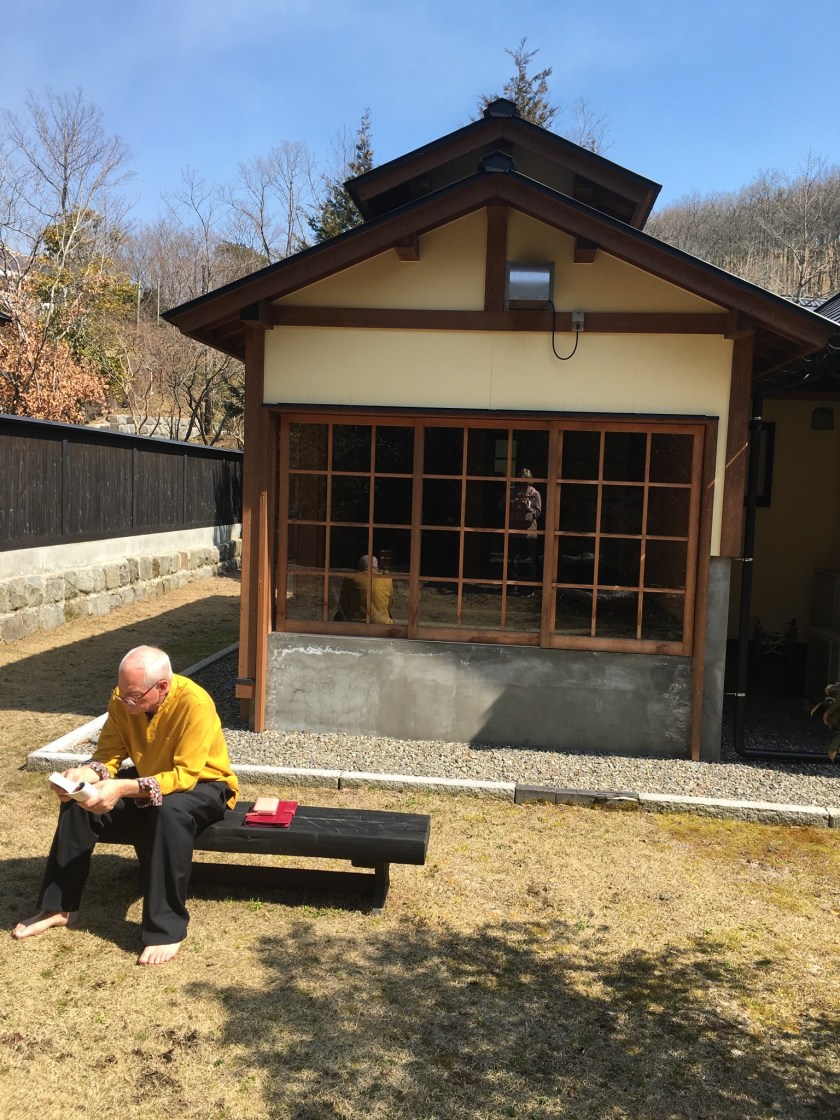
I was unsure whether the hotel staff arranged it especially. Anyway it was a warm sunny restful day which we spend reading on our little garden bench in our hotel lounge wear, theses clothes  one also wears to breakfast and dinner.
IMG_8018

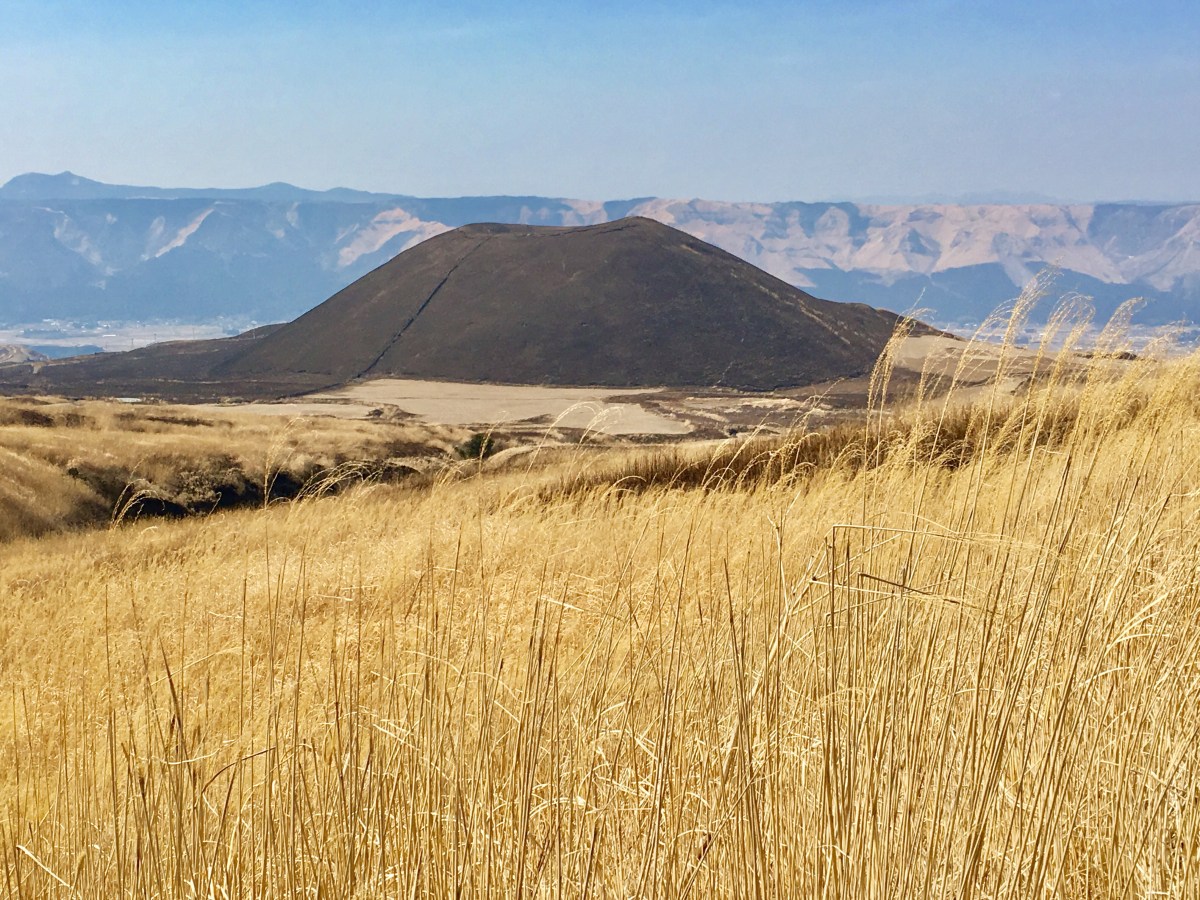
Friday before we drove to the Aso Caldera which formed after a massive eruption of the volcano about 300.000 years ago creating a large depression which initially filled with water which subsequently drained and left a caldera of 120km circumference. The caldera is impressive and  can be viewed and appreciated from above. With in the centre several volcanos and one Mt Naka remains active today.


We could only partially access the area as there had been a massive earthquake of 7 on the Richter scale in April 2016 which meant that roads were still being fixed or closed, the gondola to the Volcano was closed and the main Shrine (seen here before and after) had collapsed. It had clearly been a big disaster and must have significantly disrupted the tourist trade. People were still all talking about it.

Next we visited Arita where the production of Porcelain begann in Japan We had after the discovery of Kaolin in the 17th century.

Much of the know how came from China and Korea. Dutch merchants  exported the Porcelain for the European market.

Arita has a nice Porcelain museum and not far from there we visited a traditional charming village called the hidden village of Okawachiyama where every house has a kiln and produces their own style of pottery and porcelain. Even the bridges are adorned with Porecain vases and tiles.

We are now in Takyama off to Matsumoto castle and Kanazawa tomorrow. XxF
 

Japan 2017, Naoshima Island

Following our slightly Sake infused hurried departure fron Kobe we took the Shinkansen further south to Okayama, then took a bus to Uno Port and a ferry to Naoshima island on the 7th of March. The island had been recommended by Marcelo the owner of Rio Ancho the lovely Gourmet lodge we stayed at in Uruguay. The island lies in the Inland Sea of Japan and previously had a salt manufacturing industry. Its population was aging and declining until the early 90ties when the Benesse corporation revitalised the community through art. Benesse is a huge Japanese publishing house which also bought Berlitz Publishing and obviously had enough money and vision to create this “Art island”. We stayed for two nights in simple Japanese futon accommodation and toured the island by bus and on foot mostly in sunshine, although still cold! Benesse  house also offers some very high end accommodation and helipad arrival but we thought sleeping on the floor was much more romantic.

The next morning we explored the “Art House Project” in Hommura. This project involves the restoration of old vacant village houses and their transformation into artworks by artist. It was so much fun- wandering around, photography was forbidden so excuse the quality of the pictures below. Some of the houses were very restrained in their decorations, others more elaborate as you will see. One was done by James Turrell in collaboration with Tadao Ando who is a famous Japanese architect. In this house you experience finding light and structures  after complete darkness, unnerving, very exciting and clever at the same time. Another project had a glass staircase going up to a shrine, I also liked the Statue of Liberty inside a Japanese house with Japanese facial features. Picture of a little Japanese garden at the end.


The southern part of the island housed the Benesse House Museum, with site specific art, the Chichu Art Museum with works by Monet, Walter de Maria and more James Turrell and the Lee Ufan Museum all designed by Tadao Ando who does love his concrete. Photos again only where possible!

Finally there are many interesting outdoor artworks to see including Yayoi Kusama’s Pumpkins. I could not resist buying a small model for my desk. It will give me joy!!


The landscape was lovely and below you can see the bridge which links Honshu with Shikoku, yet another example of extraordinary Japanese infrastructure.

IMG_7843

We ate dinner twice at the same restaurant called Uogashi because the grilled fish was so good. The owner had returned to Naoshima after 30 years of living in Tokyo and working as a graphic Designer. Unfortunately he was very bored on  Naoshima and I am not sure whether he is going to stay. Possibly spring is coming.

IMG_7872

Japan 2017, Kobe, Himeji Castle and daily Japanese life

On Sunday morning after yet another fantastic breakfast of fresh grilled scallops  and giant crab legs we took the new Shinkansen from Hakodate all the way 1200km to Kobe.

The journey was extremely comfortable, despite us travelling with too much luggage. We had already send my ski boots and all our ski gear clothes to our hotel in Tokyo. Sending luggage ahead is an amazing service available all over Japan.

Looking out of the train window, I was however quite shocked by the urbanisation of Japan. From Tokyo onwards until Osaka and beyond the coastline is completely built up with a lot of not so attractive apartment blocks standing in very close proximity to each other. It is difficult to imagine that the inhabitants have any views at all. One of the problems is that Japan is extremely mountainous so most of the people crowd into the 27% of land that is flat. It is absolutely true trains and buses run on time! Tony and   I continue to commit a series of Faux PAS like not take our shoes off when required in restaurants and Onsen.

We did not do much in Kobe bar sample the famous Kobe Wagyu beef and visit a Sake factory called Hamafukutsuru. At the end of the tour we sampled their nonpasteurised Sake, which really is very strong at around 15% alcohol in the morning. It is made out of premium rice which gets reduced by around 50-60% and then goes through several processes and fermentation as described below. Being slightly drunk and disorganised made us almost miss our next Shinkansen to Okayama.

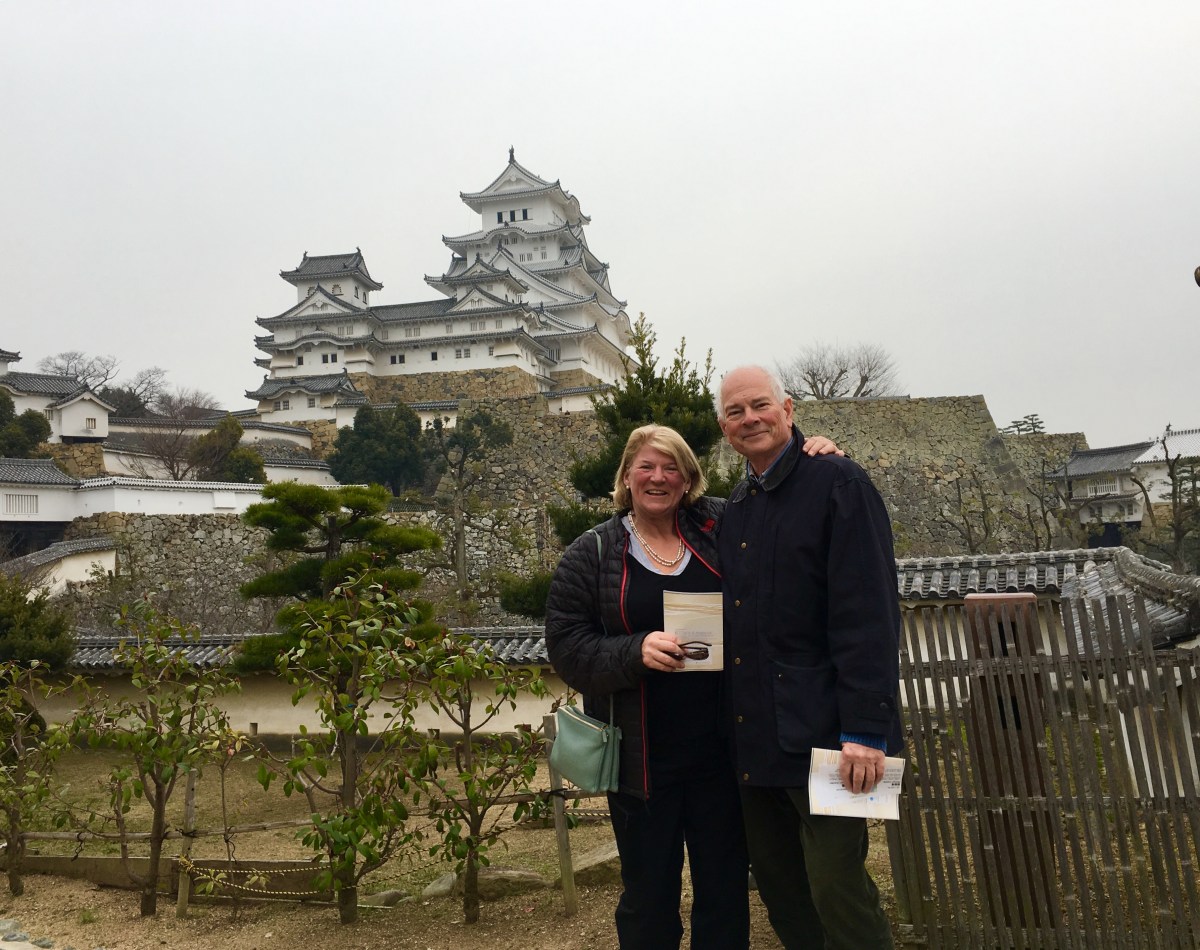
Our main reason for the stop in Kobe was to see Himeji castle only 40 min away by train, a spectacular as well as extraordinary imposing and solid structure. It is white, was originally build around 1600 to defend the realm of the local feudal lord with little loop holes to shoot from.

It has been used in numerous movies including James Bond- “you only live twice” and the Tom Cruise film – “the last Samurai”.

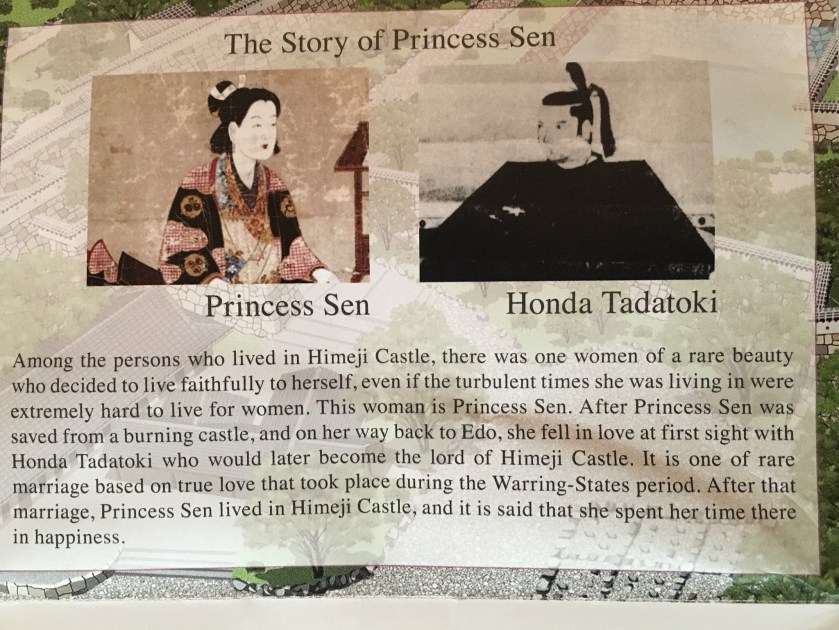
It is mainly a wooden structure inside, and has in addition a west wing with a 240m long corridor with 20 rooms where the ladies in waiting lived. It’s most famous occupant was Princess Sen, whose story you can read below.

IMG_8036

Afterwards we visited the castle gardens –  lovely with the plum blossom just starting to appear. For lunch we ate  the local delicacy-conger eel in the garden’s restaurant.

Japan 2017, Hakodate southern gateway to Hokkaido

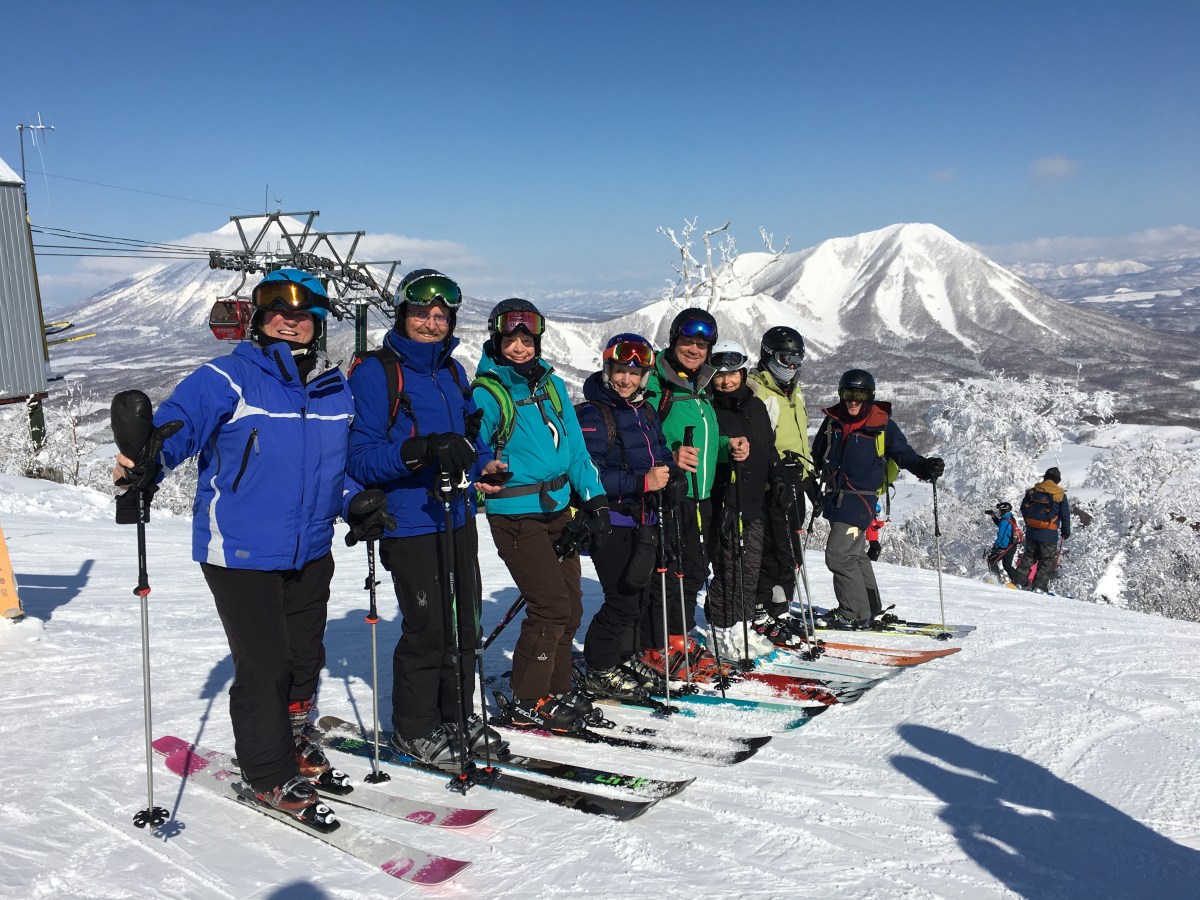
Before I tell you all about Hakodate, one more skiing picture. Ian (green jacket) took yet another picture of our beloved Volacano Yotei on the last morning and skiing down the piste afterwards lost his iPhone from his jacket. Modern technology – find my IPhone – located it on the slope! Gilly his wife found the phone ringing buried in snow! The picture shows a very happy crew afterwards, and our delicious Shabu Shabu meal with Hokkaido Wagyu beef and raw eggs on our last night!

Hakodate is the most southern town of Hokkaido and can best be described as a city of seafood, and one of the early cities which opened up to foreigners trading with Japan in 1854 after Japan’s 200 years of isolation. So it has a very pretty historical European quarter which reminded both Tony and myself of Hobart in Tasmania. The best view of Hakodate is at night from a mountain which we climbed by rope cable car!

Its most recent claim to fame is the new Shinkansen bullet train ( Tony says it looks like a squid). It connects Hokkaido with the biggest Japanese Island of Honshu through a 53.85 km tunnel of which 23.3km are under the ocean bed.


Tony and I got up at 5.30am on Saturday the 4th of March to go to the famous Hakodate fish market call Asa-ichi. We ate fresh sea urchin and raw squid thinly sliced for breakfast, which we  caught ourselves from a fish tank. Even after my squid was immersed in soya sauce it was still moving, a bit creepy. To finish off we drank delicious coffee and sampled local Trappist monk biscuits from a small stall whose Japanese owner had gone to university in Canterbury.


We visited the museum of northern people which tells the story of the Ainu people who originally inhabited Hokkaido. They were of Caucasian origin probably came from Russia and according to the Japanese hairy and smelly just like the Europeans. They hunted and fished and had their own language.

Hakodate has its own Onsen so we took a tram out to see Japanese macaque or snow monkeys enjoy them in the tropical gardens. Afterwards we had our own Onsen at one of the local hotels this time looking out to sea rather than mountains. No pictures of course!

On Sunday we travelled on the Shinkansen 1200km in 9 hrs to Kobe. The next blog will tell you about Himeji castle.xxF

Japan 2017, skiing in the sunshine at Rusutsu


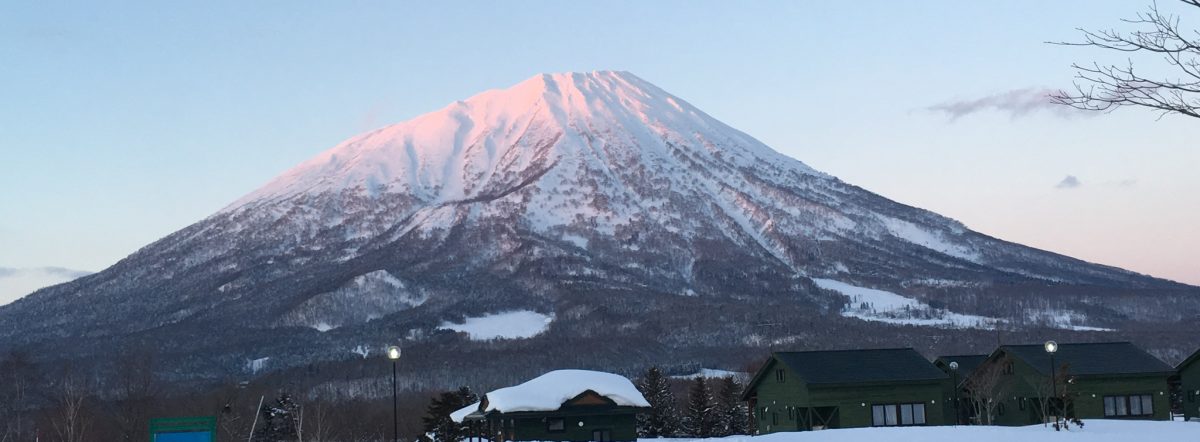
This morning we were greeted by the sun rising behind mount Yotei, we all got up at 6am and drove off to Rusutsu the largest resort in Hokkaido with stunning views and ski slopes. Also the resort is frequented by mainly elderly Japanese a welcome change to the  gung-ho snowborders in Niseko. So lucky that we could finally enjoy views of the stunning landscape.  The temperature was -17 degrees centigrade when we left but the sun soon warmed up the the mountains.

The pictures below tell all, lake Toya and the Pacific Ocean in the background.

Mount Isola also has this lovely Bell gate which kept ringing with Tony’s ski entangled in the rope.

Mounts Yotei and Shiribetzu represent husband and wife in ancient Japanese belief.  There is supposedly a special energy  running through the middle of it. Tony almost hanged himself on the bell rope. I leave the interpretation of that to you.

img_7514

img_7513

We finished the day with visiting a large Japanese hardware shop,  sushi and an Onsen  to soothe our aching and aging muscles after a hard days skiing!